Insights, Policy, Research
ENERGY EFFICIENCY AND OUR HOMES - IMPACT ON the Australian Property Market
This section includes
Key policy documents in the development of forthcoming Home Energy Rating regulation Disclosure
Consumer Research and Property Market reports
Evidence of key market drivers including the EE Data Standard - enabling visibility for Key Energy Efficiency Features
The Efficiency Edge Report. How energy efficiency in real estate is influencing property value and buyer demand. REIA and Cotality have collaborated on this report to help the industry understand what is changing, what it means in practice, and where opportunities and challenges are likely to emerge. The report examines the current policy and disclosure landscape, and the evidence linking home performance to property value, consumer behaviour and investment decisions. It also considers the practical realities of implementation, including ratings systems, data availability, technology, industry capability and market readiness.
Based on insights from the realestate.com.au Residential Audience Pulse Survey conducted in April 2026, this report examines how Australians are adopting energy efficiency features, the key motivations behind their uptake, the barriers limiting progress, and pathways to greater electrification. Key findings suggest that adoption is relatively high, but it is linked to levels of knowledge, financial capacity, homeowner status, and age. Many Australians are motivated by financial incentives such as lowering energy bills or increasing property values, while also having climate concerns. Planned future spending on energy upgrades is over $3 billion higher than a year ago.

COTALITY Watt's it Worth? Quantifying the value of solar and energy efficiency ratings in real estate. Watt’s it Worth examines the relationship between residential energy performance and market value, with a specific focus on solar power systems and estimated thermal energy efficiency. It quantifies the estimated price premium associated with these features and explores the wider implications for buyers, investors, lenders, policymakers, and developers.
Key Energy Efficiency Features will soon be visible in property technology and showcased in property advertising with the release of the Australian-first Energy Efficiency Data Standard. Over 45 proptech including REA Group, Domain, Cotality, Proptrack, MRI Software have signed up to adopt the EE Data Standard, enabling real estate professionals to identify and showcase a trusted set of energy efficiency features across the residential property experience.
Property Attribute Standard for Energy Efficiency Features. Evaluation of current status and recommendation. Research conducted by CSIRO to investigate the current representation of energy efficiency property attributes in property listings as well as the open text fields. Proptrack supplied listing data and the search field inputs over a twelve-month period 2023. “In terms of the property listing description text, the study found that a wide range of often generic terminology is used when disclosing energy efficiency information. This is problematic as it brings ambiguity and hinders consumers capacity to build their literacy on residential energy efficiency, compare properties and make an informed decision when buying and/or leasing a property.
Household research REA Group and Domain with Scout Design as part of an independent Commonwealth & NSW Government research project to find out what renters, owners and investors want to see in property advertising. Overall, the results of the testing showed that householders really value visibility of Key Energy Efficiency Features and they also assist in making sense of Home Energy Ratings
This research was conducted on behalf of the Australian, state and territory governments. It explores the challenges, drivers, and opportunities for the real estate sector to integrate home energy ratings as part of their systems and processes when residential properties are being put on the market for sale or lease.

Home Energy Rating Disclosure Framework document version2 DEC 24. This document sets out a national approach to assessing the energy performance of homes and providing energy performance certificates to consumers. It outlines policy parameters for disclosure schemes, which can be adapted and implemented by governments, and gives guidance on the development of a supportive market environment.

NSW Govt Consumer Energy Strategy: Powering our People and Communities This policy will make it easier for households and businesses to access energy saving technologies like solar, batteries and energy efficiency upgrades, that will help reduce their energy bills and ease cost of living pressure. ACTION 19 in this policy Introduce voluntary disclosure of home energy performance ratings at the point of sale or lease in 2025, beginning with trials. The policy will be reviewed to inform when to transition to a mandatory disclosure scheme we’re introducing a new scheme where people selling or leasing homes can choose to share a home’s energy rating. This will help buyers and renters know how much energy the home might use, and how much it might cost to run. It could also make the home more attractive, which will benefit people selling and leasing properties.
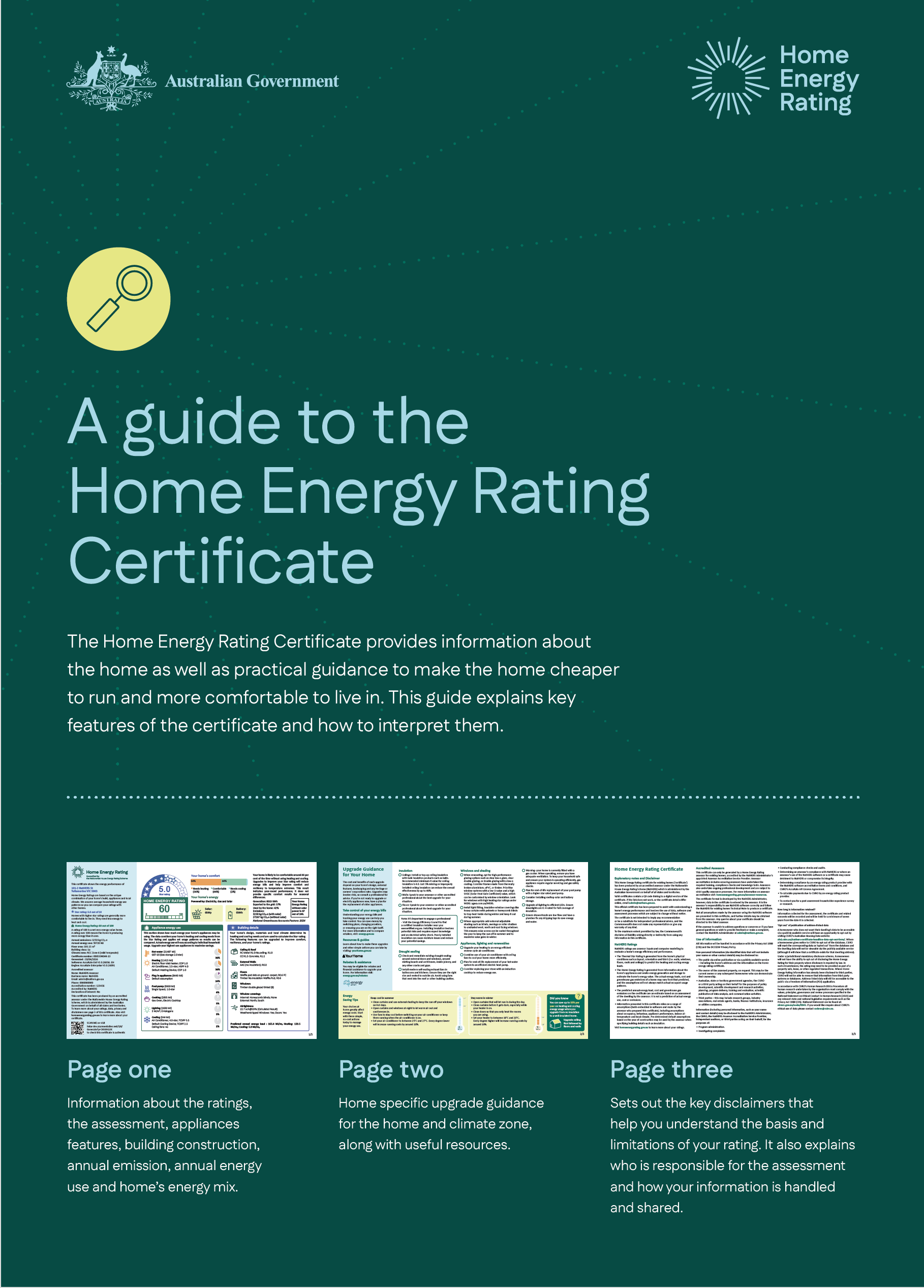
The Home Energy Rating Certificate is your essential tool for understanding how your home performs—highlighting where you can save on energy costs and improve comfort year-round. This guide walks you through the certificate, breaking down its key features, showing you how to interpret the results. It delivers tailored, practical advice to help you take action with confidence.
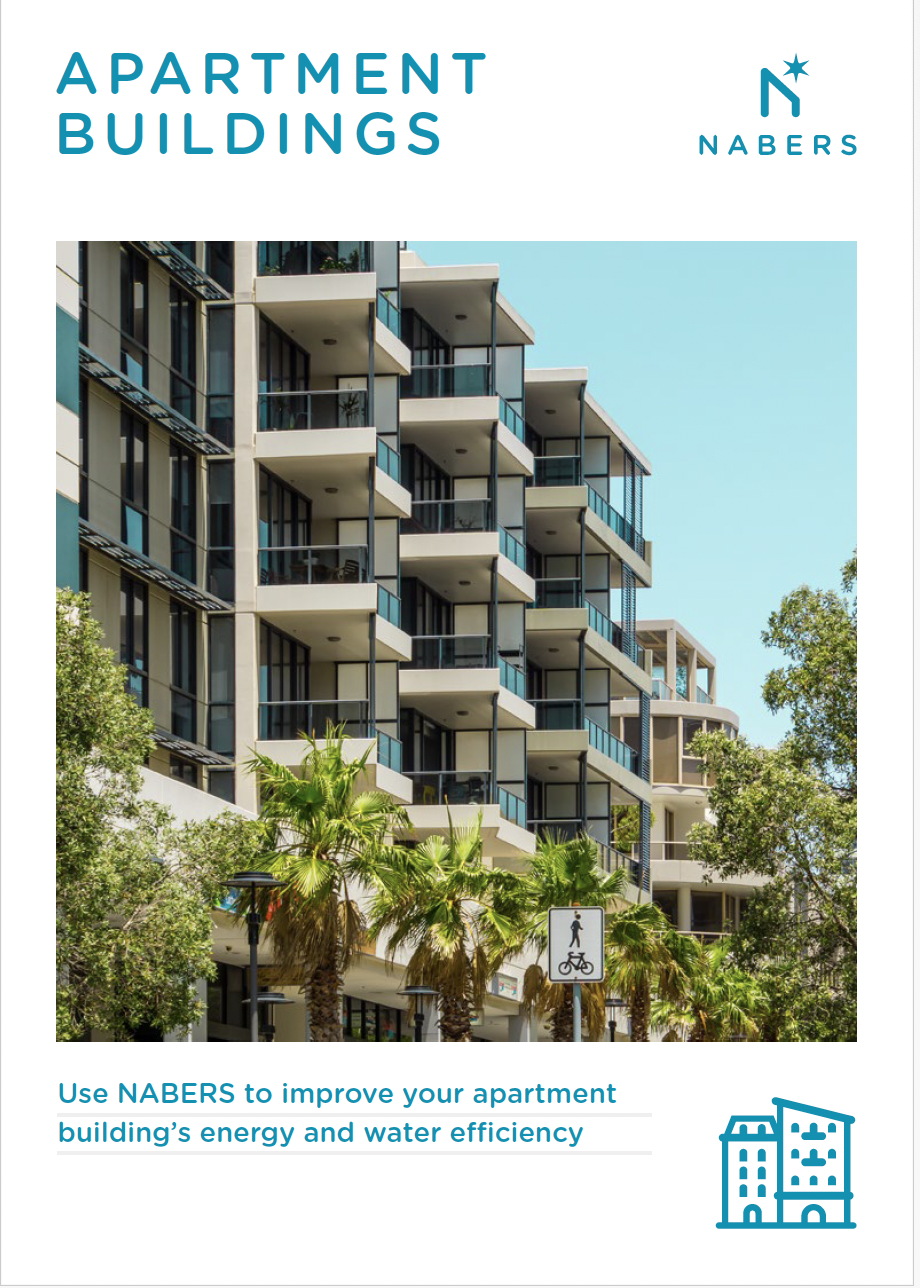
Suitable for mid-rise, high-rise and super-rise apartments (over 20 units) , NABERS ratings for apartment buildings quantify your building’s energy and water performance using a rating from one to six stars, based on the energy use of the common area/shared services such as: Reception areas, Stairwells, Lifts and lobby areas, Car parks, Gyms, pools and common areas, Heating and cooling services

The Trajectory for Low Energy Buildings is a national strategy for Commonwealth, State and Territory action across all buildings. The Trajectory has been created by the Commonwealth, States and Territories under the leadership of the Energy and Climate Change Ministerial Council (ECMC). It has a focus on: lowering costs for households and businesses, improving building comfort for all Australians.